May 12, 2026
What Is a Metal Fabricator: Job Description, Salary & Certifications Required
What is a metal fabricator? To be frank, the role covers a lot of ground.
Walk through any manufacturing plant, construction site, or aerospace facility and you'll find their work everywhere. A metal fabricator is basically the person who turns raw metal into all of it.
Metal Fabricator Job Description: What Does a Metal Fabricator Do?
The core metal fabricator job description is this: take raw metal stock and transform it into finished components or structures. That means cutting, bending, shaping, welding, and assembling metal using both hand tools and heavy equipment.
A typical metal fabricator job description covers responsibilities like:
- Reading and interpreting technical blueprints
- Measuring and marking metal before cutting or bending
- Operating plasma cutters, press brakes, shears, and drill presses
- Welding, grinding, and finishing components
- Checking finished pieces against design specifications
- Following OSHA safety standards throughout every task
Most metal fabricators work in manufacturing plants, fabrication shops, or on construction sites. It's physical work in demanding environments, which makes hearing conservation and heat acclimatization standard safety priorities across many facilities.
Key Skills Employers Look For
Technical ability matters, but so does how you operate on a busy shop floor. Employers consistently look for both.
On the technical side: blueprint reading, MIG and TIG welding proficiency, precision measurement, equipment operation, and CAD software familiarity. On the practical side: attention to detail, problem-solving under pressure, time management, and clear communication with engineers and quality control inspectors.
Physical stamina and color vision, which helps differentiate metals and assess weld quality, round out what most employers expect.
Metal Fabricator Salary: What Can You Expect to Earn?
The picture around typical metal fabricator salary varies more than most people expect.
According to ZipRecruiter's 2026 salary data, the average annual metal fabricator salary in the U.S. sits around $45,214, with most fabricators earning between $36,000 and $51,000 per year. Top earners clear $61,000 or more annually.
Three things drive where you land in that range:
- Experience. Entry-level fabricators typically start around $18 to $22 per hour. Those with several years of multi-process experience move into the $25 to $32 range. Senior fabricators leading shop floors can push above $38 per hour.
- Industry. Aerospace, defense, and oil & gas consistently pay above the national average. General manufacturing and construction track closer to the median.
- Certifications. AWS-certified fabricators and those with CNC or robotic welding credentials regularly earn above standard rates as shops modernize.
Geography matters too. California, Alaska, Washington D.C., and Massachusetts tend to offer the highest metal fabricator salary averages nationally.
Types of Metal Fabricators
Metal fabrication covers a wide range of specializations. The most common include:
- Structural fabricators who build steel frameworks for buildings, bridges, and infrastructure
- Sheet metal fabricators who work with thin metal sheets for ductwork, panels, and HVAC systems
- Precision fabricators focused on tight-tolerance parts for aerospace or medical manufacturing
- CNC fabricators whose work overlaps heavily with the role of a CNC machinist
- Pipe and structural fitters who cut, fit, and assemble pipe systems for industrial applications
Each path has its own tools, training focus, and earning ceiling.
Is a Metal Fabricator the Same as a Welder?
Not quite. A welding technician focuses specifically on joining metal using heat and filler material. A metal fabricator uses welding as one part of a broader process that includes cutting, bending, forming, and full assembly from raw stock to finished product.
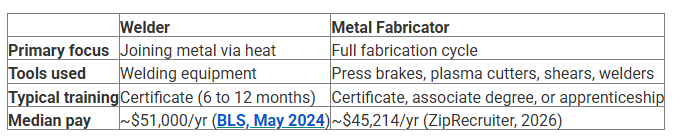
Most fabricators weld, but not all welders fabricate. Candidates who can do both are particularly valuable in light industrial hiring, especially given the pressure of the ongoing manufacturing labor shortage.
How to Become a Metal Fabricator
Knowing how to become a metal fabricator is straightforward once you see the full path. There's no single route, but there's a clear progression that works for most people.
- Start with a high school diploma or GED. Shop math, blueprint reading, and any vocational coursework will shorten your ramp time once you're in a training program.
- Pick a training path. A vocational certificate (6 to 12 months) is the fastest route to entry-level work. An associate degree (two years) adds depth in metallurgy, quality control, and CAD. An apprenticeship (three to four years) takes longer but combines paid work with structured training.
- Get hands-on with the right equipment. Time on press brakes, plasma cutters, and MIG and TIG welding systems matters more to most hiring managers than classroom hours alone.
- Consider certification. Not required to start, but it directly affects your hiring priority and starting pay.
- Apply strategically. Working with staffing agencies that specialize in skilled trades can show you openings that aren't publicly posted, including third shift positions that many job boards underrepresent.
Certifications Worth Having
You don't need credentials to get your first job, but you'll want them to advance.
The AWS Certified Welder (CW) credential is the most widely recognized starting point. It's a performance-based program with no prerequisite courses or certifications required before testing, and it provides transferable credentials recognized across employers. Process options include MIG, TIG, SMAW, and FCAW.
The Precision Sheet Metal Operator (PSMO), issued by the Fabricators and Manufacturers Association, validates competency across shearing, press brake operation, laser cutting, and mechanical finishing. It's a strong differentiator for multi-process fabricators.
For those moving into leadership, the AWS Certified Welding Fabricator (CWF) signals quality management capability. OSHA 10 or OSHA 30 is increasingly a baseline requirement before a candidate reaches the final hiring stage at mid-to-large manufacturers.
Is Metal Fabrication a Good Career?
The short answer is yes. The Bureau of Labor Statistics projects a modest 1 percent decline in assembler and fabricator employment from 2024 to 2034, but still anticipates roughly 198,800 job openings per year, driven largely by retirements and workers moving to other fields.
That's nearly 200,000 openings annually. Fabricators who expand into machine operator or automation technician skill sets are especially well-positioned as shops modernize.
Related careers worth exploring: welding technician, CNC machinist, ironworker, boilermaker, and sheet metal worker.
Start Your Metal Fabrication Career with the Right Partner
Metal fabrication has a lower barrier to entry than most people expect and a higher ceiling than most realize. Whether you're earning your first certificate or you're a seasoned fabricator ready for your next move, the right employer connection makes all the difference.
At Nesco Resource, we've been making those connections since 1956. We're a nationally ranked staffing and workforce solutions company specializing in light industrial and skilled trades placement across manufacturing, construction, and aerospace.
From contingent roles to direct-hire placements, we match candidates to opportunities that fit their skills, schedule, and goals. We also help employers find the qualified talent they need.
Frequently Asked Questions
What is a metal fabricator?
A metal fabricator is a skilled tradesperson who cuts, bends, welds, and assembles raw metal into finished structures or components. They work from blueprints across manufacturing, construction, and aerospace.
What is the metal fabricator job description?
The core metal fabricator job description involves reading blueprints, operating cutting and forming equipment, welding, inspecting finished work, and maintaining safety standards throughout the fabrication process.
How to become a metal fabricator?
Learning how to become a metal fabricator starts with a high school diploma or GED, followed by a vocational certificate, associate degree, or apprenticeship. Hands-on equipment experience and AWS certification strengthen your candidacy significantly.
What is a steel fabricator?
A steel fabricator is a type of metal fabricator who works specifically with steel to produce structural components like building frameworks and bridges.
How much does a metal fabricator make?
The average metal fabricator salary in the U.S. is approximately $45,214 per year, with top earners exceeding $61,000 annually depending on experience, industry, and certifications.
Is a metal fabricator the same as a welder?
No. Welding is one skill a metal fabricator uses. Fabricators also cut, bend, form, and assemble metal, making the role significantly broader than welding alone.
What certifications do metal fabricators need?
The most impactful credentials are the AWS Certified Welder (CW), Precision Sheet Metal Operator (PSMO), and OSHA 10 or 30.
Is metal fabrication a good career?
Yes. The BLS projects close to 200,000 annual job openings in the field despite modest employment declines. Fabricators with multi-process skills and certifications are well-positioned for long-term growth.