
April 29, 2026
Skilled Labor: The Complete Employer's Guide to Hiring and Staffing
Finding qualified workers has never been harder. The skilled labor shortage is reshaping industries nationwide, and the employers who understand it best are the ones hiring most successfully.
Whether you need someone on the floor tomorrow or you're mapping out a longer-term hiring strategy, this guide to skilled labor covers everything, including:
- What skilled labor means
- How skilled vs. unskilled labor compares
- Real skilled labor examples by sector
- The fastest skilled labor staffing options available today
What Is Skilled Labor? Definition and Why It Matters
Skilled labor refers to work that requires specialized training, certifications, or formal education to perform effectively. These aren't roles you can fill overnight. Instead, they demand expertise built through apprenticeships, vocational programs, or degree coursework.
Skilled workers fall into two broad categories:
- Blue-collar trades: Electricians, plumbers, welders, machinists, and HVAC technicians
- White-collar roles: Engineers, accountants, IT professionals, and healthcare providers
For industries where a single error can truly cost thousands of dollars (or worse), that expertise is non-negotiable. With the construction industry alone facing hundreds of thousands of unfilled positions, the urgency to secure top talent has never been greater.
The Numbers Behind the Shortage
The data makes the urgency for skilled labor hard to ignore.
The construction industry needed to attract an estimated 501,000 additional workers on top of normal hiring in 2024, and demand hasn't let up since. Meanwhile, another study by Deloitte and The Manufacturing Institute found that 1.9 million manufacturing jobs could go unfilled over the next ten years if talent challenges aren't addressed.
These aren't abstract projections. They reflect real positions sitting open right now in facilities across the country: roles that – if they stay unfilled – slow production, stretch existing workers thin, and put project timelines at risk.
For employers, the takeaway is simple: the competition for skilled labor isn't easing. Building a proactive skilled labor staffing strategy today is the only way to stay ahead of a shortage that shows no signs of resolving on its own.
Skilled vs. Unskilled Labor: Key Differences for Employers
Understanding the difference between skilled vs. unskilled labor helps you allocate your budget and recruiting effort where it counts most.
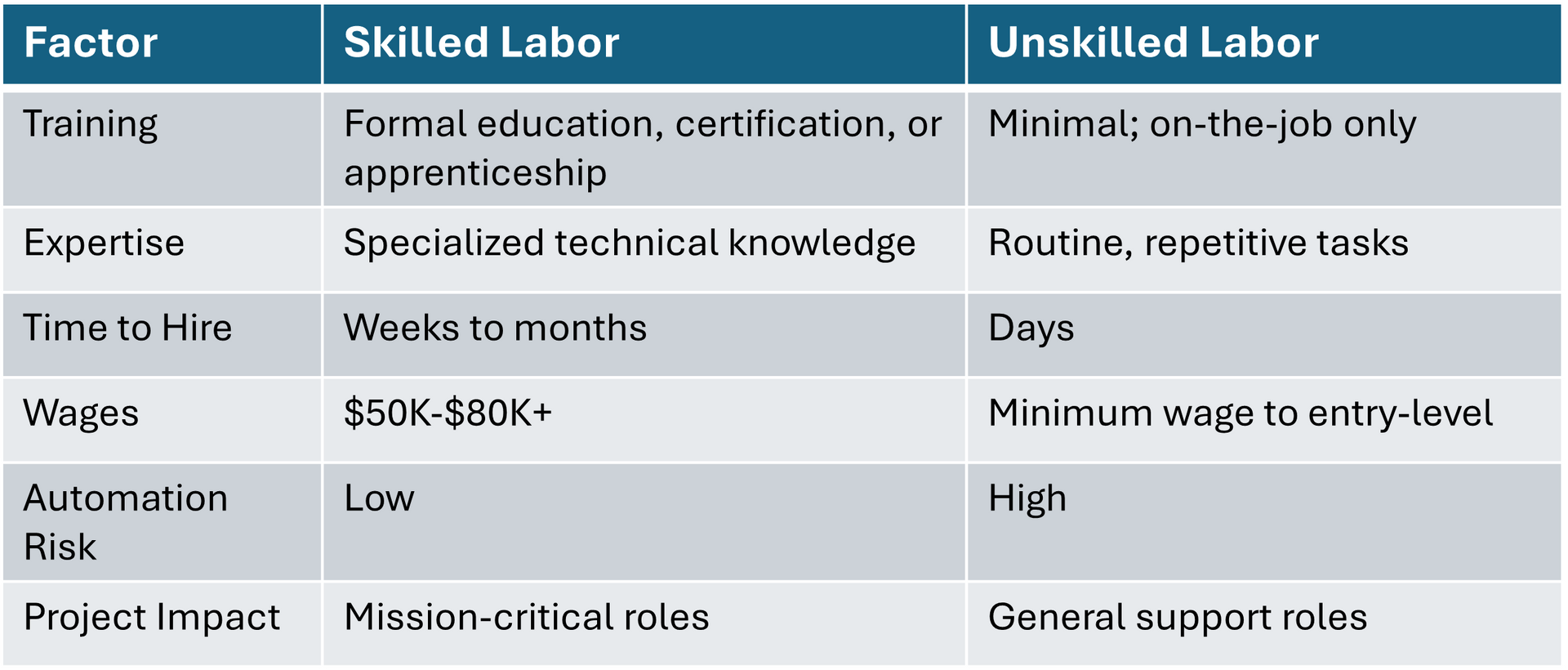
The distinction between skilled vs. unskilled labor affects long-term workforce planning in a significant way. Unskilled roles face higher automation risk, while skilled positions grow harder to fill every year.
The consequences of misapplying the skilled vs. unskilled labor framework (putting an unqualified worker in a technical or safety-critical role) can be costly both financially and operationally. When you fully understand the difference between skilled vs. unskilled labor, you make better hiring decisions at every stage of the process.
Hire skilled workers for technical tasks, safety-critical operations, and complex projects. Use unskilled workers for general support, material handling, and cleanup where expertise isn't required.
Common Skilled Labor Examples by Industry
Here are the most in-demand skilled labor examples from the sectors where staffing demand is highest.
Construction Skilled Labor Examples
- Electricians: Install, inspect, and maintain electrical systems
- Plumbers: Design and service piping, drainage, and water supply systems
- HVAC Technicians: Install and maintain heating, cooling, and ventilation systems
- Welders: Join metal components using high-heat processes for structural work
Manufacturing Skilled Labor Example
- CNC Machinists: Program and operate precision cutting machinery
- Electrical Technicians: Maintain and troubleshoot production-line electrical systems
- Maintenance Technicians: Prevent downtime through proactive equipment care
- Quality Assurance Inspectors: Verify that products meet specifications and safety standards
More skilled labor examples worth noting: pipefitters, boilermakers, millwrights, and instrumentation technicians are all high-demand roles in industrial settings. These roles (and the manufacturing workers who fill them) require certifications and two-plus years of hands-on training.
They command $50k–$80k+ salaries and are nearly impossible to automate. That makes them a top hiring priority.
How to Hire Skilled Labor: 3 Proven Options
When you need to hire skilled labor, you've got three paths forward.
Direct Hire
Best for permanent, niche positions. You control sourcing, interviewing, and onboarding, but expect a 45–60 day timeline and limited access to passive candidates.
Skilled Labor Temp Agency
Best for project surges and seasonal peaks. A skilled labor temp agency places pre-screened workers in days, not weeks, with no long-term commitment required.
Skilled Labor Staffing Solutions
The most comprehensive option, covering temp-to-hire, contract staffing, and managed services. Workers arrive vetted, certified, and E-verified. Payroll and benefits are handled for you.
Struggling to close the skill gap in your organization? A strong skilled labor staffing partner makes all the difference.
Why Skilled Labor Staffing Agencies Deliver Results
Skilled labor staffing consistently outpaces direct hire on the metrics that matter most:
- Speed: Fill roles in 2–3 days vs. 45+ days through direct recruiting
- Access: Pre-screened candidates across every skilled trade and specialty
- Flexibility: Scale your skilled workforce up or down as business demands shift
- Compliance: Payroll taxes, workers' comp, and benefits handled for you
- Expertise: Recruiters who know what certified and safety-trained really means in your industry
When you need to find skilled labor quickly, this model works.
Partner With a Workforce Solutions Leader
The right skilled labor solutions combine speed, access, and deep industry knowledge. Understanding skilled vs. unskilled labor and choosing the right skilled labor staffing model are the foundations of a high-performing team.
At Nesco Resource, we've been making meaningful connections since 1956. As a nationally ranked staffing and workforce solutions company, we specialize in helping businesses find skilled labor across construction, manufacturing, industrial, and professional sectors.
From contingent labor and direct hire to vendor-on-premise and managed workforce programs, we deliver flexible, efficient, and strategic workforce solutions tailored to your needs with access to more than 12 million candidates nationwide. When you're ready to build your skilled labor staffing strategy, we're ready to help.